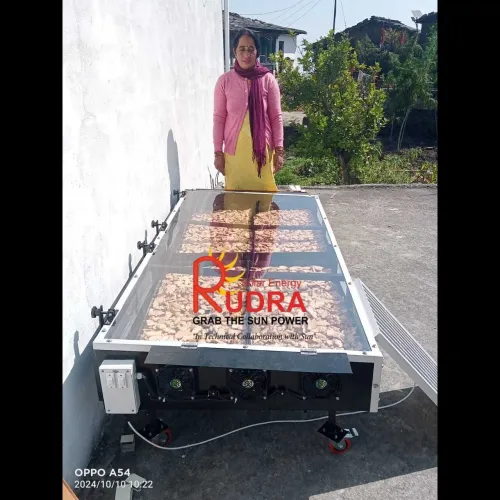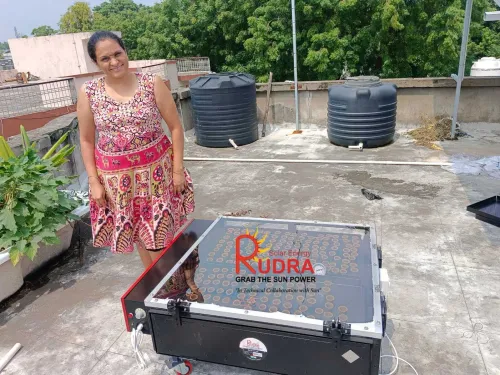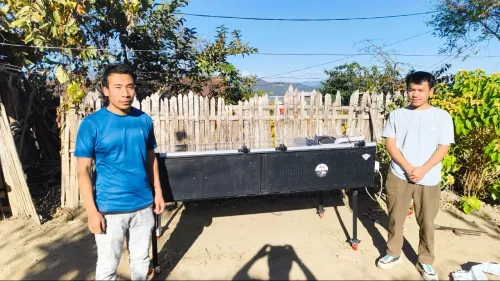



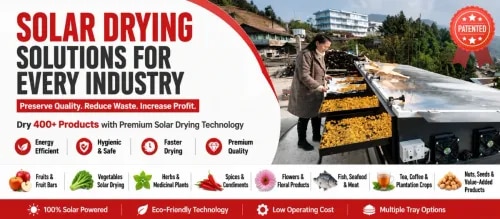
The Best Solar Drying Machine in India
20+ Years of Solar Drying Expertise. Built on Research, Innovation & Field Experience.
Rudra Solar Energy has more than two decades of experience in the development, design, testing, manufacturing and deployment of solar drying technologies and solar thermal solutions for agricultural, food-processing and livelihood applications.
Founded in 2006 and incorporated as a Private Limited company in 2023, Rudra Solar Energy has grown from a focused solar-energy initiative into an experienced technology, research and manufacturing organization with extensive field exposure across different crops, climates, applications and user requirements.
Within solar drying, our work goes beyond manufacturing equipment. We focus on understanding how drying actually performs in the field—how commodity characteristics, preparation, loading, airflow, temperature, humidity, solar radiation and final-moisture requirements interact to influence the drying process.
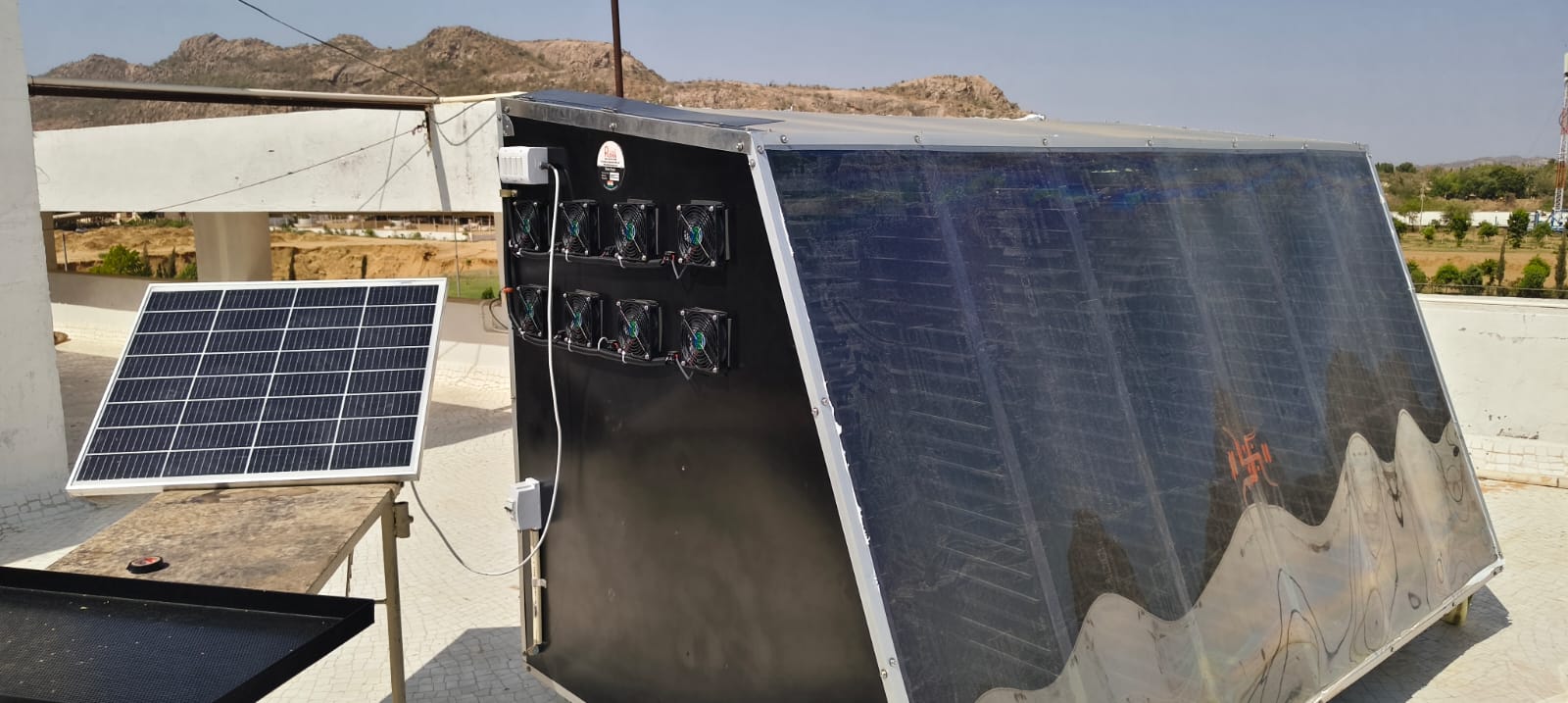
Today, Rudra solar drying technologies are operating across 20 countries and all states and Union Territories of India, providing extensive field experience across varied climatic, geographical, agricultural and food-processing environments.
Our objective is simple:
To make solar drying more practical, technically sound, application-oriented and useful for real-world value addition.
Our Solar Drying Journey
2006 — Beginning of the Journey
Rudra Solar Energy began its journey in 2006 with a focus on developing practical applications of solar thermal energy.
Solar drying became an important part of this journey because agricultural and food products require more than heat—they require an appropriate combination of preparation, airflow, moisture removal, loading and environmental conditions.
Over time, our work expanded from developing solar drying equipment to understanding the complete process around agricultural and food drying.
20+ Years — Building Solar Drying Expertise
Over the years, Rudra Solar Energy has developed practical experience in solar drying across a wide range of applications, including:
* Fruits
* Vegetables
* Spices
* Herbs
* Grains
* Seeds
* Oilseeds
* Pulses
* Dry fruits
* Fish
* Flowers
* Agricultural produce
* Food-processing applications
* Commodity-specific value-addition projects
Each commodity behaves differently during drying.
A mango slice does not dry like chilli.
Turmeric does not behave like herbs.
Grains and seeds require different loading and moisture-management practices from high-moisture fruits.
This commodity-specific understanding has become an important part of our solar drying approach.
Research & Technology Development
Continuous work in product design, engineering, testing and field evaluation has helped Rudra Solar Energy build strong in-house solar drying capabilities.
Our work includes understanding and improving:
* Solar heat utilization
* Drying-chamber design
* Airflow distribution
* Moisture removal
* Tray arrangement
* Product loading
* Temperature behaviour
* Humidity conditions
* Commodity-specific drying requirements
* Field performance
* Solar-only and applicable hybrid configurations
* Monitoring and data analysis
2023 — Incorporated as a Private Limited Company
In 2023, Rudra Solar Energy was converted into a Private Limited company, creating a structured platform for further technology development, manufacturing, research, collaboration and larger-scale deployment.
Today — Scaling Solar Drying Technology & Impact
Today, Rudra Solar Energy combines research, engineering, manufacturing, field experience, intellectual property, institutional collaboration and real-world deployment to develop and scale practical solar drying solutions.
Solar Drying R&D at the Core
Innovation in solar drying at Rudra Solar Energy is supported by our Centre for Excellence, which houses our in-house Design, Research & Development capabilities.
Our solar drying R&D work extends across:
* Solar dryer design and engineering
* Drying-chamber development
* Airflow optimization
* Prototype development
* Product performance testing
* Commodity-specific drying evaluation
* Temperature and humidity monitoring
* Tray-loading studies
* Application-specific optimization
* Field-performance analysis
* IoT-enabled monitoring
* Data collection and evaluation
* Continuous product improvement
Our Centre for Excellence is equipped with instruments and monitoring systems that support testing and analysis of solar thermal and solar drying technologies.
IoT-based monitoring can also be used in applicable systems to study operating parameters and understand product performance in greater detail.
This allows us to follow a systematic development cycle:
Design → Prototype → Test → Measure → Analyze → Improve → Deploy
The goal is not simply to create a dryer that becomes hot.
The real objective is to develop drying systems that can support appropriate moisture reduction, airflow and process control under actual operating conditions.
Understanding Solar Drying as a Process
Drying is fundamentally a process of controlled moisture reduction.
Successful drying depends on more than the machine itself.
Important variables include:
* Commodity
* Variety and maturity
* Initial moisture
* Required final moisture
* Slice thickness or product dimensions
* Washing and preparation
* Pretreatment, where applicable
* Quantity loaded
* Tray-loading density
* Whether pieces overlap
* Available tray area
* Airflow
* Drying temperature
* Ambient temperature
* Relative humidity
* Solar radiation
* Season
* Local weather
* Dryer design
* Hybrid or backup configuration, where applicable
* Packaging after drying
* Storage conditions
This is why Rudra Solar Energy does not treat every crop as if it follows the same drying cycle.
There is no technically accurate universal drying time or temperature for all commodities.
The drying process must be matched to the product and the required final condition.
Commodity-Specific Solar Drying Expertise
Fruit Drying
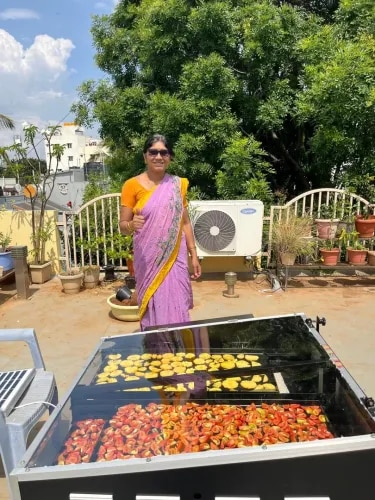
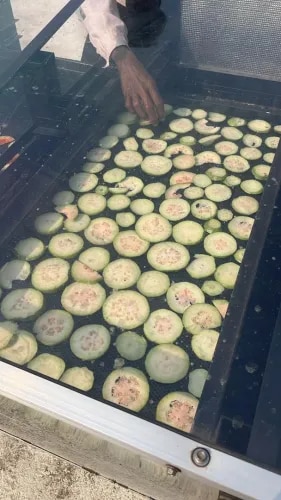
Fruits such as mango, banana, pineapple, apple, guava and other suitable produce often require washing, sorting, peeling or cutting before drying.
Uniform slice thickness, controlled tray loading and adequate airflow are important for more consistent moisture reduction.
Fruit drying may support the production of dried slices, pieces and ingredients for further value-added processing.
Vegetable Drying
Vegetables can differ considerably in structure and moisture content.
Depending on the commodity, preparation may involve washing, cutting, slicing, peeling or pretreatment before drying.
The required process must consider final product use, loading density and moisture target.
Spice Drying
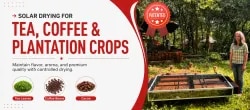
Spices such as chilli, turmeric, ginger and other suitable commodities require careful moisture management.
Excessive heat should not be treated as a shortcut for faster drying.
Temperature sensitivity, product form, loading and required final moisture must be considered.
Herbs and Medicinal Plants
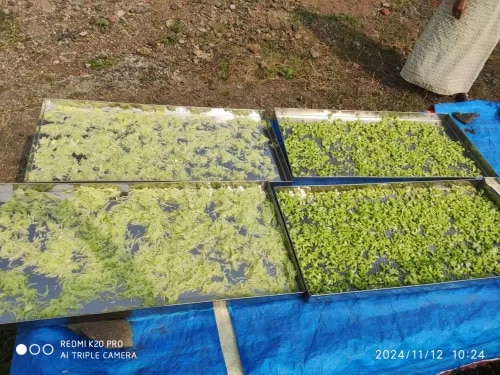
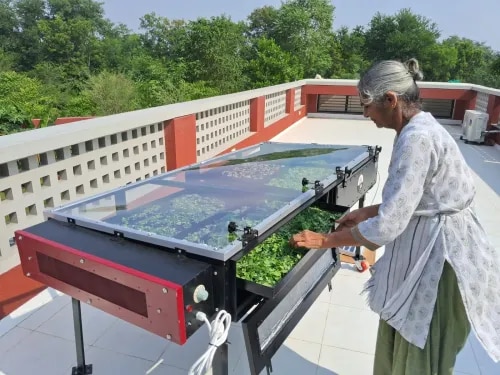
Herbs and leafy materials often require relatively light loading and appropriate temperature management.
Airflow becomes especially important because delicate plant material can behave differently from dense fruits or roots.
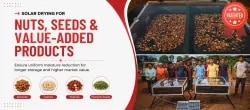
Grain, Seed, Pulse and Oilseed Drying
Grains, pulses, seeds and oilseeds usually require different drying strategies from sliced fruits and vegetables.
Important considerations can include:
* Layer depth
* Bulk density
* Airflow
* Initial moisture
* Required storage condition
* Intended food or seed use
A multipurpose solar dryer does not mean that every commodity should be processed with the same operating procedure.
Fish and Other Food Applications
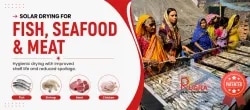
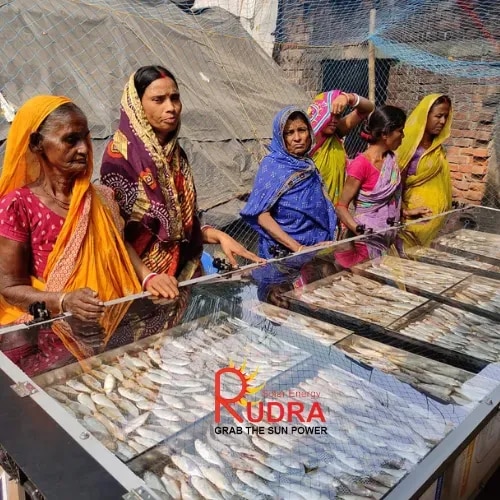
Solar drying can also be considered for suitable fish and other food-processing applications when correct hygiene, preparation, moisture control, packaging and storage practices are followed.
Drying alone should never be treated as a guarantee of food safety or shelf life.
Intellectual Property & Continuous Innovation
Innovation is an ongoing process at Rudra Solar Energy.
Our organization has developed and secured intellectual property through continued work in product design and solar thermal technology.
6 Design Patents
Our portfolio includes six design patents, reflecting continued work in differentiated product design and engineering solutions.
1 Product Patent
We also hold one product patent representing our work in innovative solar thermal technology.
Continuous Patent Development
Innovation does not stop with existing intellectual property.
Our team continues to work on new technologies, product improvements, design development and additional patent filings.
For solar drying, this continuous-development approach allows us to explore improvements in:
* Product geometry
* Thermal behaviour
* Airflow
* Monitoring
* Ease of operation
* Commodity suitability
* Manufacturing
* Field performance
Quality, Environmental Responsibility & Occupational Safety
Rudra Solar Energy follows internationally recognized management-system standards and holds the following certifications:
* ISO 9001:2015 — Quality Management System
* ISO 14001:2015 — Environmental Management System
* ISO 45001:2018 — Occupational Health & Safety Management System
* CE Certification for applicable products
These certifications reflect our commitment to systematic processes related to quality management, environmental responsibility, occupational health and safety, and applicable product-conformity requirements.
For us, quality does not begin or end with final inspection.
It extends across:
Design → Material Selection → Manufacturing → Assembly → Testing → Quality Control → Dispatch → Field Learning
In solar drying, process quality also depends on how the equipment is used. Commodity preparation, tray loading, airflow, final moisture assessment, packaging and storage remain important parts of successful drying.
Proven Through Real-World Solar Dryer Deployment
Technology becomes meaningful when it performs in actual field environments.
Rudra Solar Energy has built substantial practical experience through deployment of solar drying and other solar thermal solutions across 20 countries and all Indian states and Union Territories.
Our solar drying user base includes approximately:
45,000+ Solar Dryer Users
This field exposure has provided valuable experience across:
* Different climatic zones
* Dry and humid regions
* Coastal environments
* High-altitude locations
* Tropical and subtropical conditions
* Fruit-growing regions
* Spice-producing regions
* Grain and seed-processing applications
* Small rural enterprises
* SHG and FPO applications
* Institutional projects
* Food-processing businesses
Every deployment provides information about real operating conditions.
Field experience helps us understand issues that cannot always be identified through laboratory testing alone, including:
* User practices
* Loading behaviour
* Commodity variation
* Seasonal changes
* Installation conditions
* Maintenance needs
* Weather-related performance
* Processing expectations
* Application-specific challenges
This field learning continuously feeds back into our research, engineering and product-development process.
Solar Dryer Manufacturing & Supply Capability
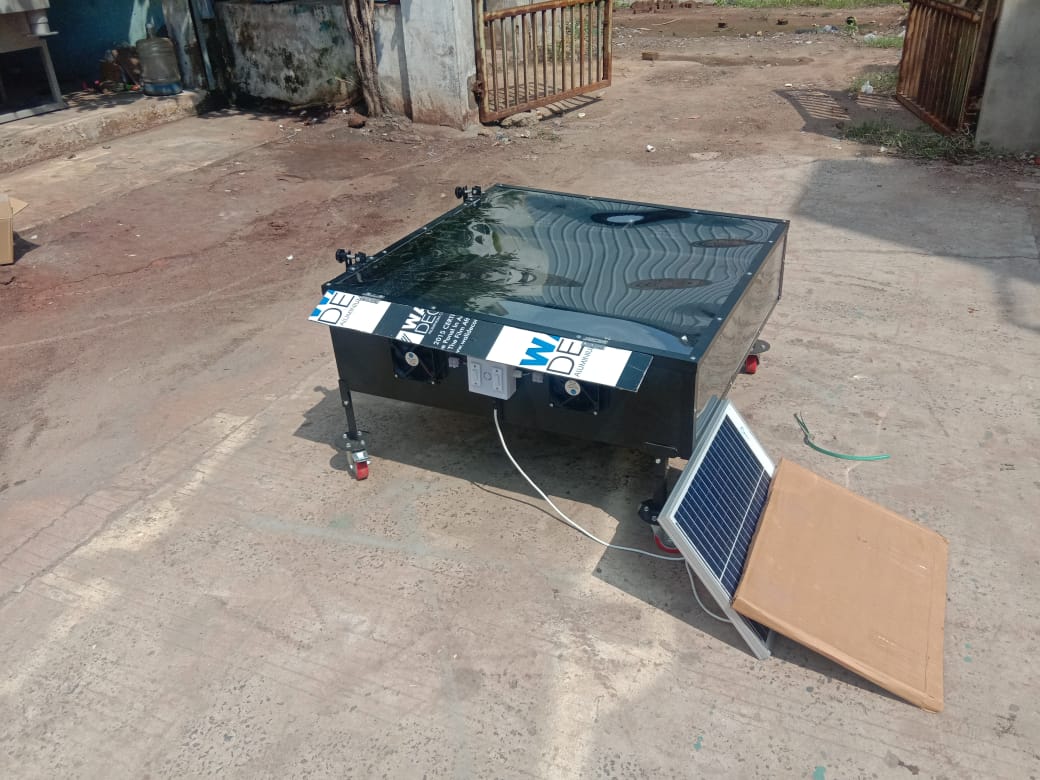
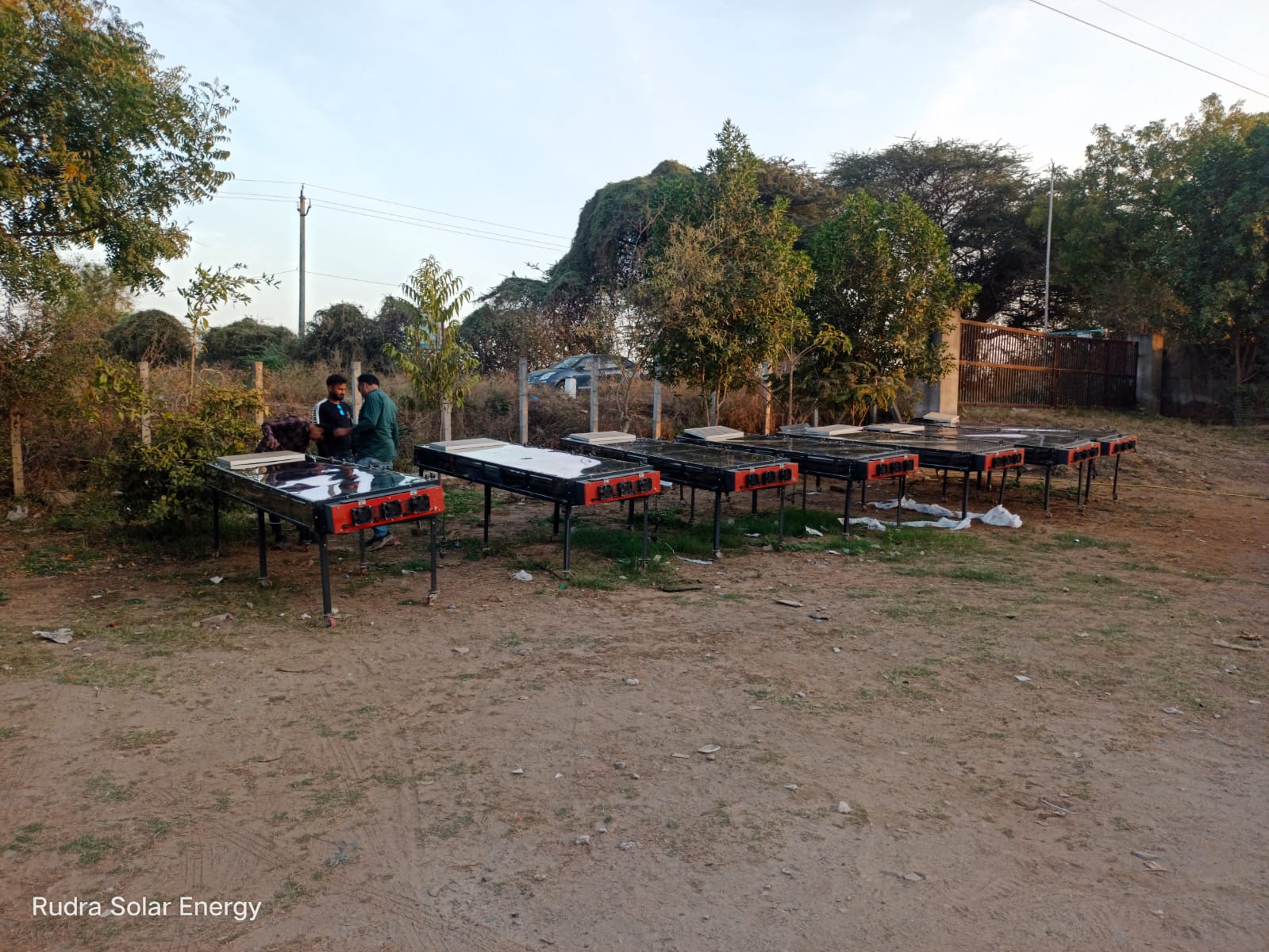
Rudra Solar Energy has developed manufacturing, assembly, testing and storage infrastructure to support customer requirements as well as larger project deployments.
Current Solar Dryer Production Capacity
Approximately 300 solar dryer units per month
Our facility includes approximately 5,000 sq. ft. of storage space for raw materials and finished goods.
To support faster delivery, inventory of approximately 50 units of each model may be maintained depending on product requirements and demand.
Our trained team works across functions including:
* Manufacturing
* Assembly
* Product testing
* Quality processes
* Inventory management
* Packaging
* Dispatch
This combination of manufacturing capability, trained personnel and inventory planning allows Rudra Solar Energy to support individual customers as well as larger institutional and project requirements.
Solar Drying Research & Institutional Collaboration
Meaningful progress in agricultural drying often requires collaboration between engineering, agriculture, food science, research and field implementation.
Rudra Solar Energy has undertaken technical research projects in association with IITs and agricultural universities, including work related to solar thermal technologies and practical applications.
Such collaborations help combine:
Academic Research + Engineering Expertise + Agricultural Understanding + Field Experience + User Requirements
For solar drying, collaboration can support work in areas such as:
* Commodity-specific drying studies
* Airflow analysis
* Thermal performance
* Moisture-reduction behaviour
* Process optimization
* Food-processing applications
* Product development
* Monitoring and data analysis
* Field validation
We are open to collaboration with:
* IITs and universities
* Agricultural universities
* Food-technology institutions
* Research organizations
* Government agencies
* Technology companies
* NGOs
* CSR foundations
* Development organizations
* FPOs
* Social enterprises
* International development agencies
Solar Drying for Agricultural Value Addition
One of the most important applications of solar drying is agricultural value addition.
Farmers often sell produce in fresh form soon after harvest.
For suitable commodities, drying can create additional processing possibilities by converting fresh produce into dried ingredients or products.
Examples may include:
Fresh Mango → Dried Mango
Fresh Chilli → Dried Chilli
Fresh Ginger → Dried Ginger
Fresh Turmeric → Dried Turmeric for Further Processing
Fresh Banana → Dried Banana Products
Fresh Herbs → Dried Herbal Ingredients
The value of solar drying does not come simply from removing water.
It comes from building a complete processing system around the commodity:
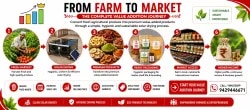
Selection → Preparation → Loading → Drying → Moisture Assessment → Cooling → Packaging → Storage → Market
The final commercial result depends on product quality, processing discipline, packaging, market demand and business execution.
Solar drying should therefore be viewed as an enabling technology for value addition—not as a guarantee of profit, income or market acceptance.
Technology That Supports Livelihoods
Rudra Solar Energy’s work extends beyond equipment development.
Our broader solar thermal ecosystem has contributed to the creation of 15,000+ micro-entrepreneurs, helping create livelihood opportunities around solar-based products and applications.
Solar drying can be especially relevant to entrepreneurship because it can connect agricultural production with local food processing.
Potential users include:
* Farmers
* Women entrepreneurs
* Self-Help Groups
* Farmer Producer Organisations
* Rural enterprises
* Food-processing MSMEs
* Cooperatives
* Tribal and community organizations
* Youth entrepreneurs
* Social-impact programs
Our field experience has reinforced an important principle:
A technology must not only work technically—it must also fit the operational, economic and social realities of the people using it.
Solar Drying for SHGs and FPOs
Solar drying can support group-based processing where commodities are aggregated from multiple producers.
For an SHG or FPO, the first question should not simply be:
“Which capacity solar dryer should we buy?”
The process should begin by understanding:
* Main commodities
* Quantity available during harvest
* Number of participating farmers
* Product preparation requirement
* Daily processing capacity
* Tray-area requirement
* Processing season
* Labour availability
* Packaging facilities
* Market opportunity
A smaller enterprise producing dried fruit products may need a very different system from an FPO handling large seasonal quantities of spices, grains or horticultural produce.
The best solution is therefore application-specific.
Solar Drying in Different Climatic Conditions
One of Rudra Solar Energy’s major sources of experience is exposure to diverse geographical and climatic conditions.
Solar drying behaviour varies significantly across India.
High-Humidity and Coastal Regions
In regions with high ambient humidity, the surrounding air already contains substantial moisture.
This can affect moisture removal and drying duration.
Adequate airflow and realistic weather planning become particularly important.
Hot and Dry Regions
Dry ambient conditions may support faster moisture removal, but temperature management remains important for sensitive products.
Higher temperature is not automatically better for every commodity.
Mountain and High-Altitude Regions
Solar radiation, ambient temperature, day length and nighttime conditions may differ considerably from plains regions.
Commodity and season must be considered when planning processing.
Monsoon Conditions
Cloud cover, rainfall and humidity can reduce solar-only drying performance.
Where uninterrupted processing is commercially important, an appropriate hybrid or backup configuration may need to be evaluated.
No single dryer performance claim can accurately represent every climate and application.
Why Airflow Matters in Solar Drying
Temperature receives a great deal of attention in drying, but airflow is equally important.
During drying, moisture moves from inside the product toward its surface and then into the surrounding air.
That moisture-laden air must be carried away from the product.
If airflow is inadequate, the drying environment can become less effective even if chamber temperature appears high.
Effective solar drying therefore requires an appropriate interaction between:
Heat + Airflow + Moisture Removal + Product Preparation + Loading
This is one reason why Rudra Solar Energy focuses on the drying process and not only on chamber temperature.
Why Tray Loading Matters
Tray loading directly affects how air interacts with the product.
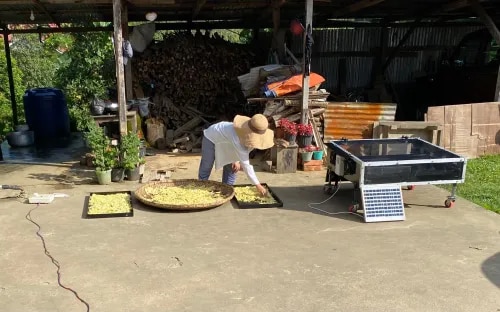
For sliced fruits and vegetables, excessive overlapping can restrict exposed surface area and contribute to uneven drying.
For grains, seeds and oilseeds, excessive layer depth may influence airflow and moisture movement.
Correct loading therefore depends on:
* Commodity
* Product dimensions
* Tray size
* Available surface area
* Loading depth
* Airflow
* Required batch capacity
A stated kilogram capacity alone does not fully describe how a commodity will behave inside a dryer.
Solar-Only and Hybrid Drying
Solar-only drying uses available solar energy as the primary thermal source.
Its performance naturally depends on solar radiation and weather conditions.
For some users, solar-only operation may be suitable.
Other processors may need greater operational flexibility due to:
* Cloudy conditions
* Monsoon periods
* High humidity
* Fixed production schedules
* Continuous processing requirements
In such cases, an appropriate hybrid configuration may be evaluated depending on the model and application.
The correct choice should be based on the processing requirement rather than assuming that one operating mode is suitable for everyone.
There Is No Universal Solar Drying Time
A common question is:
“How long will this product take to dry?”
There is no technically correct universal answer.
Drying time can change according to:
* Commodity
* Variety
* Initial moisture
* Final moisture target
* Slice thickness
* Product preparation
* Pretreatment
* Quantity loaded
* Tray loading
* Airflow
* Drying temperature
* Ambient temperature
* Relative humidity
* Solar radiation
* Season
* Local weather
* Dryer configuration
Even two batches of the same commodity can behave differently.
For this reason, responsible solar drying focuses on reaching the required final product condition rather than following one arbitrary number of hours.
Post-Drying Handling Is Part of the Process
Drying does not end when the product is removed from the dryer.
Post-drying handling can strongly influence product stability.
Important steps can include:
* Cooling
* Moisture assessment
* Conditioning, where applicable
* Hygienic handling
* Packaging
* Labelling
* Storage
A dried product exposed again to humid air may absorb moisture.
Similarly, unsuitable packaging or storage conditions can affect product quality even when the drying process itself was satisfactory.
Solar drying should therefore be understood as part of a complete post-harvest processing system.
Working with CSR & Social-Impact Organizations
Rudra Solar Energy has associated with organizations working in:
* CSR
* Rural development
* Livelihood creation
* Community development
* Agriculture
* Food processing
* Entrepreneurship
* Sustainability
Solar drying can be integrated into social-impact programs where agricultural value addition, post-harvest processing or livelihood development forms part of the intervention.
Our experience allows us to support projects across different stages:
Need Assessment → Commodity Assessment → Technology Selection → Product Deployment → Training → Implementation → Monitoring → Performance Evaluation → Impact
This makes Rudra Solar Energy a potential technology and implementation partner for programs seeking practical solar drying and agricultural value-addition interventions.
Why Organizations Choose Rudra Solar Drying Expertise
20+ Years of Specialized Experience
More than two decades of experience in solar thermal technology, engineering, development and field deployment.
45,000+ Solar Dryer Users
Extensive field exposure through solar drying applications across diverse geographies and user groups.
Deployment Across 20 Countries
International field experience across different climatic and operational conditions.
Presence Across All Indian States & Union Territories
Experience across a wide range of crops, climates, agricultural systems and processing environments.
Strong R&D Infrastructure
An in-house Design and R&D team supported through the Centre for Excellence and testing capabilities.
Commodity-Specific Understanding
Experience across fruits, vegetables, spices, herbs, grains, seeds, oilseeds, pulses and other suitable agricultural applications.
Patented Innovation
Six design patents and one product patent, with continued technology and patent development.
Internationally Recognized Management Systems
ISO 9001:2015, ISO 14001:2015 and ISO 45001:2018, along with CE certification for applicable products.
Manufacturing Readiness
Approximately 300 solar dryers per month manufacturing capacity supported by trained personnel, inventory planning and storage infrastructure.
Research Collaboration
Technical research experience with IITs and agricultural universities.
Social-Impact Experience
Experience contributing to more than 15,000 micro-entrepreneurs and working with CSR and development organizations.
Our Solar Drying Approach
At Rudra Solar Energy, our solar drying approach is built around six principles:
Understand the Commodity
Every agricultural and food product has different physical characteristics, moisture behaviour and processing requirements.
Prepare Correctly
Sorting, washing, slicing, blanching or other pretreatment can significantly influence drying.
Engineer the Process
Capacity, tray area, airflow, temperature behaviour and moisture removal should match the application.
Test & Measure
Performance should be evaluated through actual parameters and field conditions rather than assumptions.
Improve Through Field Learning
Operating experience from users and different climates feeds back into product development.
Create Practical Value
Solar drying should support real processing requirements, whether the user is a farmer, SHG, FPO, institution, entrepreneur or food-processing enterprise.
From Fresh Produce to Value-Added Possibilities
India produces an enormous variety of fruits, vegetables, spices, grains, herbs, seeds and other agricultural products.
A portion of this produce can potentially be processed into dried products where the commodity, process and market are suitable.
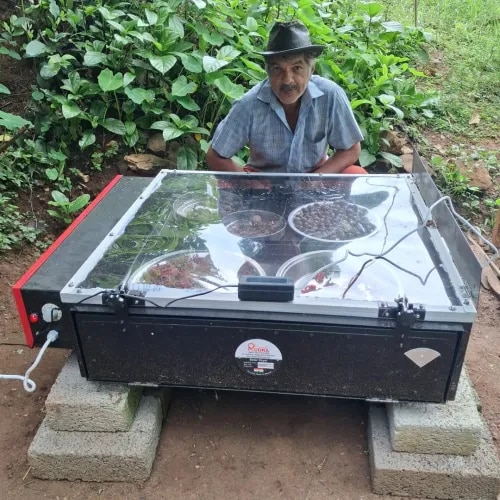
Solar drying offers a renewable-energy-based approach to moisture reduction while providing an enclosed alternative to direct open-sun exposure.
But successful solar drying requires more than placing food inside a chamber.
It requires:
Commodity Knowledge + Preparation + Engineering + Airflow + Moisture Control + Monitoring + Packaging + Field Experience
For more than two decades, Rudra Solar Energy has worked to combine these elements through engineering, research, manufacturing, testing and real-world deployment.
Advancing Solar Drying Knowledge Across India
Solar drying requirements vary from one region to another.
Mango-processing conditions in Maharashtra are different from apple-processing requirements in Jammu & Kashmir.
Lakadong turmeric in Meghalaya presents a different processing context from chilli in Nagaland.
Coconut and fish applications in coastal regions differ from grain and oilseed handling in inland agricultural districts.
For this reason, effective solar drying knowledge must combine technical principles with local crop, climate and processing context.
Our work across India allows us to continuously build practical understanding of how solar drying can be applied to different commodities and production environments.
From Solar Drying Technology to Real-World Application
Solar drying has significant potential in:
* Post-harvest management
* Agricultural value addition
* Food processing
* Spice processing
* Fruit and vegetable processing
* Rural entrepreneurship
* FPO and SHG enterprises
* Institutional programs
* CSR projects
* Livelihood development
The strongest results come when technology is integrated with the correct processing method.
That is why Rudra Solar Energy approaches solar drying as a combination of:
Research + Engineering + Process Knowledge + Manufacturing + Deployment + Field Learning
Our journey from 2006 to today reflects a continued commitment to making solar drying more practical for real agricultural, food-processing and livelihood applications.
Partner with Rudra Solar Energy for Solar Drying
Whether you are a farmer, FPO, SHG, food processor, entrepreneur, institution, researcher, CSR organization, NGO, government agency, agricultural university, technology company or development organization, we welcome opportunities to collaborate.
Our team can support requirements ranging from proven solar drying products to application-specific projects, research collaboration and larger-scale implementation.
The process begins by understanding:
* What needs to be dried
* How much needs to be processed
* How the commodity is prepared
* What final product is required
* What climatic conditions apply
* What operating configuration is appropriate
From there, an appropriate solar drying solution can be evaluated.
Rudra Solar Energy
20+ Years of Solar Drying & Solar Thermal Experience | Research | Engineering | Manufacturing | Field Deployment | Agricultural Value Addition
Have any custom requirements?
Latest Updates
News, milestones and new arrivals from our team.